






 Domicile
 Des produits

29+ years in pharmaceutical machinery, covering capsule filling, tablet pressing, blister packaging, tablet and capsule counting, cartoning, GMP production, and overseas machine service.

Avez-vous déjà observé la structure des capsules ? Certaines capsules de gel semblent ne présenter aucune trace d’adhésif, et pourtant elles sont parfaitement étanches. Comment est-ce possible ?
Dans l'industrie des compléments alimentaires et pharmaceutiques, le scellage des capsules est essentiel à la garantie de la qualité des produits. Le moindre interstice entre la capsule et son corps peut entraîner une fuite, réduisant considérablement l'efficacité du médicament. Ceci est particulièrement vrai pour les produits liquides comme les capsules d'oméga-3, pour lesquels les exigences de scellage sont encore plus strictes. Les méthodes de scellage varient considérablement selon le contenu. Cet article dévoilera les techniques permettant d'obtenir des capsules parfaitement scellées et expliquera comment optimiser le scellage en production.
Points clés à retenir
● Définition et importance du scellage des capsules
● Les différences entre gélules , gélules molles et gélules dures remplies de liquide
● Méthodes courantes de scellage des capsules : justification, avantages et inconvénients
● Processus étape par étape du scellage des capsules en production réelle
● Machines utilisées pour le scellage des capsules et leur fonctionnement
● Principaux défis liés au scellage des capsules liquides et comment Rich Packing y répond

Le scellage d'une capsule désigne la formation d'une structure étanche et résistante entre la capsule et son corps, agissant comme une barrière protectrice contre toute interférence extérieure avec le médicament ou l'efficacité de son principe actif. Cette définition de base est particulièrement importante pour les produits contenant des huiles, des liquides ou des poudres sensibles à l'humidité. Un bon scellage permet d'éviter les fuites, l'oxydation, la diffusion des odeurs et l'absorption d'humidité.
Quand on demande comment les capsules sont scellées, on fait généralement référence à deux choses :
Verrouillage et scellage de capsules rigides à double paroi
sceller une capsule molle monobloc, telle qu'une gélule molle, pendant ou après sa formation
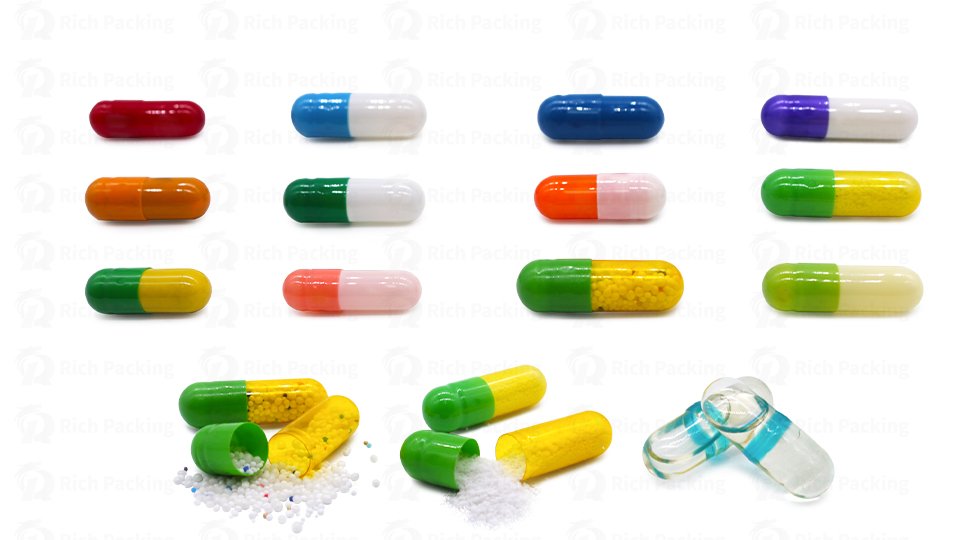
Les gélules à deux pièces, un type de gélule traditionnel, se composent d'un corps et d'une capsule. Apparues depuis le milieu du XIXe siècle, ces gélules sont courantes dans les médicaments vendus en pharmacie et à l'hôpital, comme les gélules à opercule ; d'autres gélules, telles que les gélules HPMC, adoptent également cette structure.
Tant que le contenu est solide, ces capsules ne nécessitent généralement pas de scellage secondaire. La conception de la capsule permet une fermeture relativement étanche après son passage dans le dispositif de verrouillage. Cependant, dans certains cas, les fabricants peuvent sceller les capsules de gélatine dure afin d'améliorer la sécurité ou de réduire le risque de séparation pendant le transport.
Les gélules liquides sont une catégorie de gélules en deux parties. Elles sont couramment utilisées pour le conditionnement de compléments alimentaires à base d'huile ou d'eau. Par exemple : capsules d'huile de poisson Les capsules d'oméga-3 et les vitamines liposolubles utilisent cette structure.
Ces capsules, contenant du liquide, sont plus sujettes aux fuites que les poudres et les granulés. C'est pourquoi certaines capsules liquides sont scellées par un anneau de gélatine appliqué autour de la jointure. D'autres fabricants utilisent la fusion, en dissolvant légèrement l'interface de la capsule avec de l'alcool, ce qui permet à la capsule et au corps de fusionner.
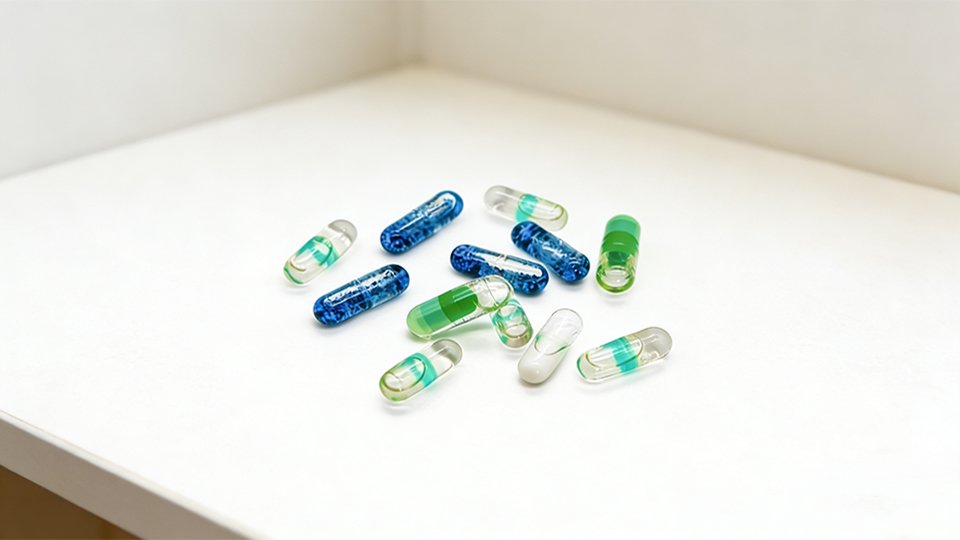
Il existe des différences structurelles entre les capsules molles et les capsules dures, étroitement liées à leur méthode de scellage. Contrairement à la structure en deux parties des capsules molles, les capsules molles :
● Utilisez une coque extérieure monobloc et scellée
● Généralement, le remplissage et le scellage se font en une seule étape.
● Couramment utilisé pour les ingrédients actifs à base d'huile et liquides
● Plus facile à avaler
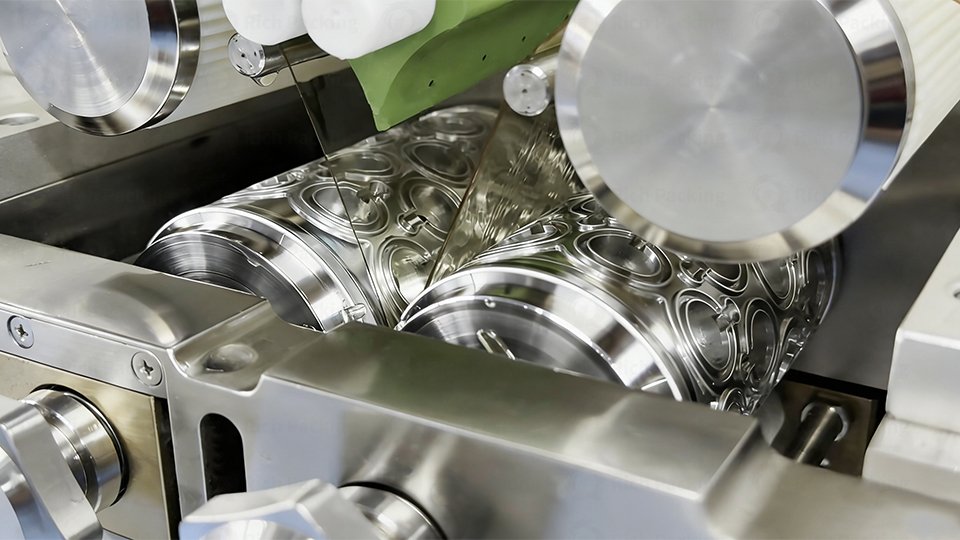
Les capsules molles sont généralement formées par des rubans de gel chauffés de part et d'autre, qui se rejoignent au niveau des rouleaux de formage. Elles sont ensuite remplies de liquide et mises en forme par pression. De ce fait, elles assurent une bonne étanchéité sans nécessiter de scellage secondaire. C'est pourquoi le procédé de scellage des capsules dépend de leur nature : capsule molle ou capsule dure remplie de liquide.
C'est là le cœur du sujet. Si votre public recherche des informations sur le scellage des capsules, c'est cette partie qui l'intéresse vraiment.
Vous trouverez ci-dessous les méthodes de scellage les plus courantes utilisées dans l'industrie, qui vous aideront à mieux comprendre comment sceller les capsules.
Tableau 1 - Méthodes courantes de scellage des capsules
|
Méthode |
Principe |
Utilisé pour |
|
Scellage de la bande de la capsule |
Une bande de gélatine ou d'HPMC est appliquée autour de la couture. |
Capsules liquides, capsules d'huile de poisson, produits oméga-3 |
|
scellement par fusion |
La couture est assouplie et collée à chaud. |
Capsules de gélatine dure, certaines capsules d'HPMC |
|
Scellement par micro-pulvérisation |
Une petite quantité de solution d'étanchéité est pulvérisée sur le joint. |
Capsules dures, lignes automatisées |
|
Fluide d'étanchéité / Étanchéité par solvant |
Un fluide de scellement permet de refermer la couture après séchage. |
Certains procédés spécialisés ou plus anciens |
|
Scellage thermique ponctuel |
De la chaleur est appliquée à des points précis de l'articulation capsulaire. |
Certaines applications de capsules dures |
Scellage de la bande de la capsule
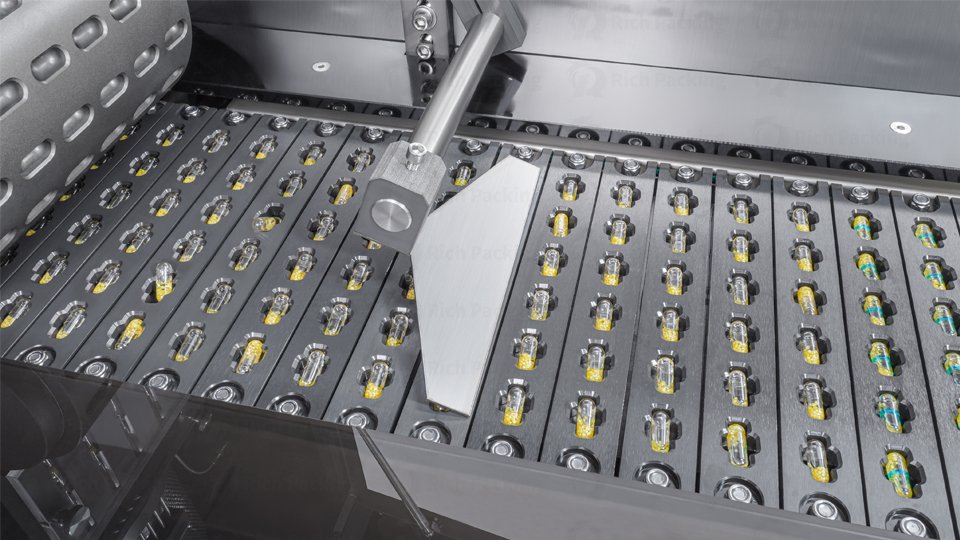
Il s'agit d'une des méthodes de scellage les plus utilisées dans la production de produits nutraceutiques et pharmaceutiques. Elle est couramment employée pour sceller les capsules d'huile, car elle contribue à réduire les fuites. La bande colorée améliore également l'aspect du produit et la reconnaissance de la marque. Comme indiqué dans la section Comprimés et capsules, le cerclage présente des avantages tels que la prévention des fuites, une meilleure visibilité de la marque et une preuve d'inviolabilité.
scellement par fusion
Le scellage par fusion consiste à souder directement le joint. Il s'agit plutôt d'un soudage de la capsule que de l'ajout d'une bande de scellage externe. Cette technique exige un contrôle plus précis, mais le résultat est plus esthétique. Lorsqu'ils comparent le scellage par bande et le scellage par fusion, les fabricants prennent généralement en compte l'apparence, la compatibilité et le risque de fuite.
Scellement par micro-pulvérisation
Cette méthode utilise une pulvérisation localisée, permettant un contrôle plus précis de la zone de scellage. Selon la fiche technique de CapsCanada, le scellage par micro-pulvérisation abaisse le point de fusion au niveau de la jonction et favorise l'adhérence. Cependant, cette méthode de scellage contrôlé de capsules liquides exige une surveillance attentive pendant le chauffage afin d'éviter la formation de bulles ou toute déformation.
Scellage par solvant
Il s'agit d'une méthode traditionnelle autrefois utilisée. Le principe consiste à ramollir la capsule puis à la refermer après séchage. Cette méthode est moins courante aujourd'hui, les lignes de production modernes privilégiant des méthodes plus stables et contrôlables. Dans certaines applications spécifiques, les fabricants l'emploient encore pour sceller les capsules de gélatine dure.
Scellage thermique ponctuel
Cette méthode est simple à mettre en œuvre et nécessite moins de matériaux. Cependant, son étanchéité est moins performante, ce qui la rend inadaptée aux produits à sceller pour liquides exigeant une grande fiabilité. Elle est généralement déconseillée lorsque les fabricants recherchent une capsule scellée d'une grande fiabilité.
Scellage par bande pour capsules dures remplies de liquide
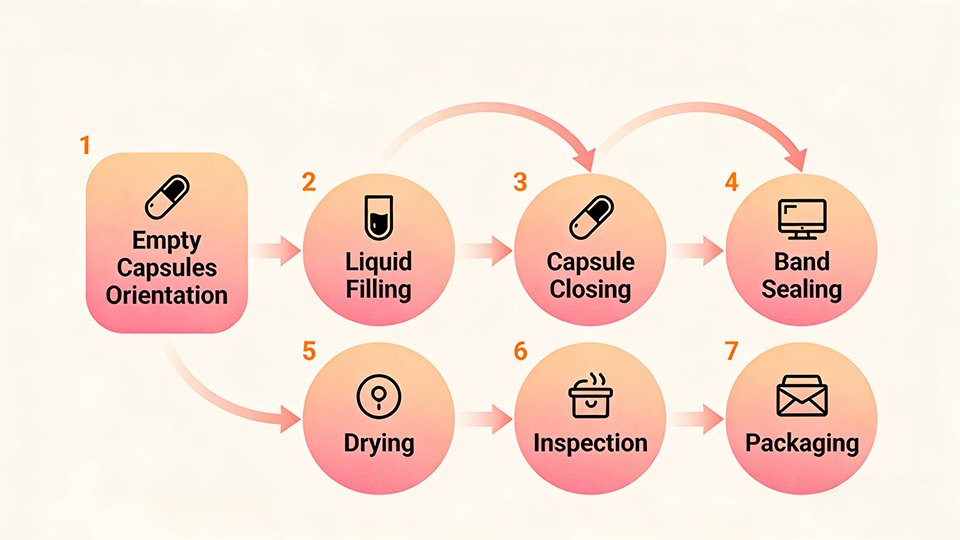
Pour le scellage par bande, les fabricants commencent par séparer et disposer les capsules vides, puis les remplissent de liquide et les ferment. Après un court temps de repos pour stabiliser la pression interne, une bande de scellage est appliquée autour de la jonction entre la capsule et le corps de la capsule. Les capsules sont ensuite séchées, leur scellage est contrôlé et les unités défectueuses sont éliminées avant le conditionnement final.
Scellement par fusion ou micro-pulvérisation
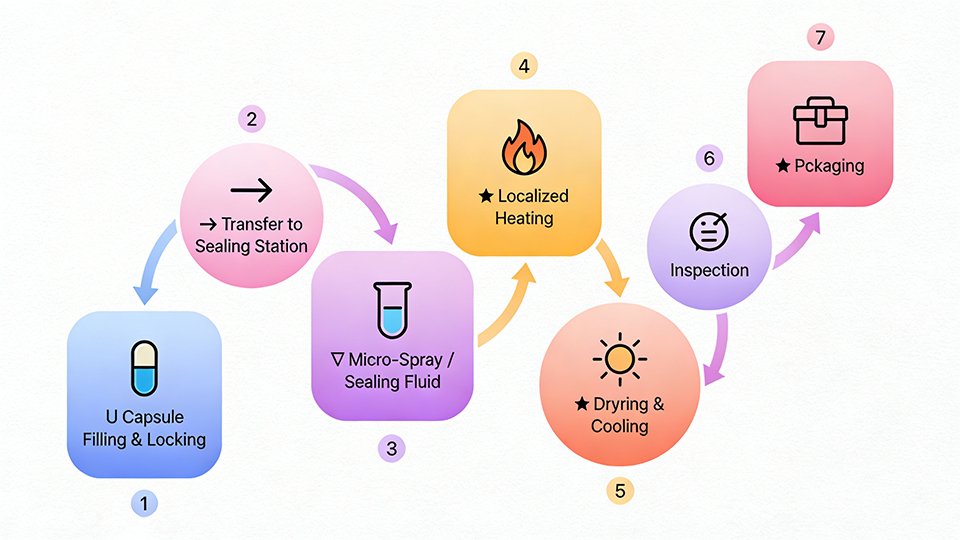
Lors du scellage par fusion ou par micro-pulvérisation, les gélules sont d'abord remplies et scellées, puis transférées vers une station de scellage. Un liquide de scellage ou un liquide de micro-pulvérisation est appliqué au niveau de la soudure, suivi d'un chauffage localisé pour lier la capsule au corps. Après séchage et refroidissement, les gélules sont inspectées afin de détecter toute fuite ou déformation ; seules les gélules conformes sont conditionnées.
Scellage de gélule molle
Le scellage des gélules molles suit un procédé différent. La gélatine est d'abord préparée, puis transformée en rubans. Le produit de remplissage est injecté lors de l'encapsulation, et la gélule molle est scellée simultanément. Ensuite, les gélules molles sont séchées, contrôlées et conditionnées sous film d'huile.
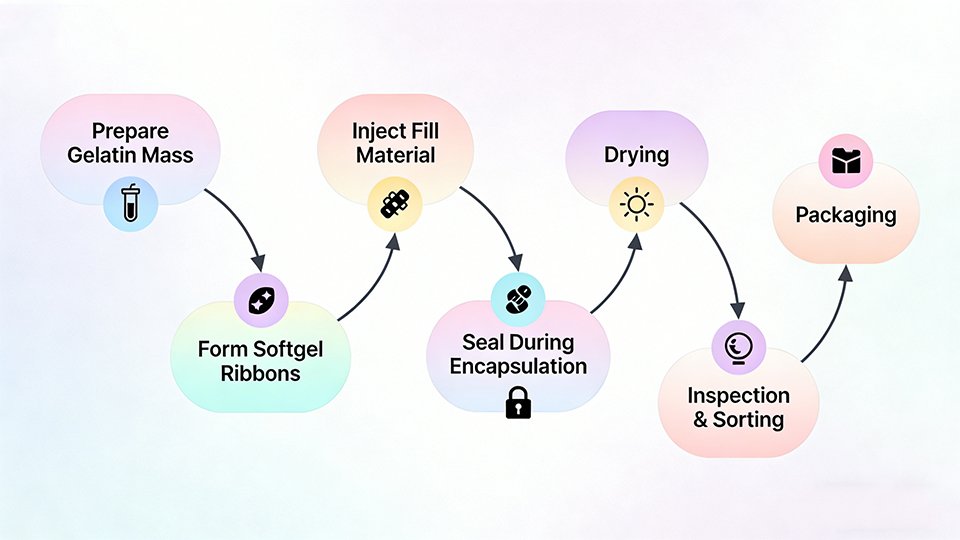
Si le processus est la recette, la machine est la cuisine. Différentes opérations nécessitent différents équipements selon le rendement, le type de remplissage et l'étanchéité requise.
Les machines couramment utilisées pour le scellage des capsules comprennent :
Machine à bander les capsules : utilisée pour appliquer une bande de gélatine ou d'HPMC autour de la partie articulaire de la capsule.
Machine de scellage par micro-pulvérisation : pulvérise le liquide de scellage à un endroit précis pour un scellage précis.
Unité de séchage des capsules : Utilisée pour sécher les capsules molles après leur formation.
Machine de remplissage de capsules liquides semi-automatique : adaptée à la production pilote, aux tests et aux petits lots.
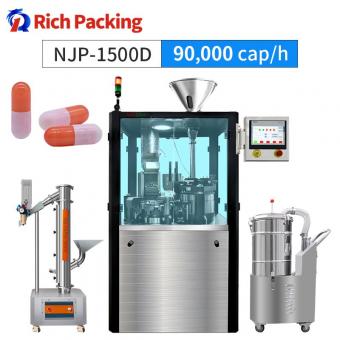
Machine de remplissage automatique de capsules liquides : utilisé pour les applications continues à grande échelle remplissage de capsules et l'étanchéité.
En production, la qualité du scellage des capsules dépend étroitement de la concentricité du moule, de la précision du remplissage et de la précision de l'indexation. Même de légères variations peuvent entraîner des fuites de solides ou de liquides, voire des plis et des cassures. Forte de plus de 30 ans d'expérience en recherche et développement, Rich Packing maîtrise parfaitement le remplissage, le verrouillage et le scellage des capsules, une expertise qui se reflète pleinement dans ses machines.
Voici les difficultés courantes rencontrées par les fabricants lors de la production de capsules et de la gestion du scellage.
Fuite au niveau de la jonction bouchon-corps : les huiles et les liquides peuvent facilement s’échapper par de petits interstices.
Séparation incomplète entre le bouchon et le corps : le bouchon et le corps ne sont pas correctement séparés, ce qui peut avoir un impact négatif sur le remplissage et le scellage.
Précision de remplissage : un dosage inexact peut entraîner une perte de produit et une incohérence.
Déformation de la capsule : des conditions de chauffage ou de séchage inadéquates peuvent endommager l'enveloppe de la capsule.
En pratique, l'efficacité des méthodes de scellage des capsules repose sur un juste équilibre entre le matériau de la capsule, la précision du remplissage, le fluide de scellage et le contrôle du séchage.
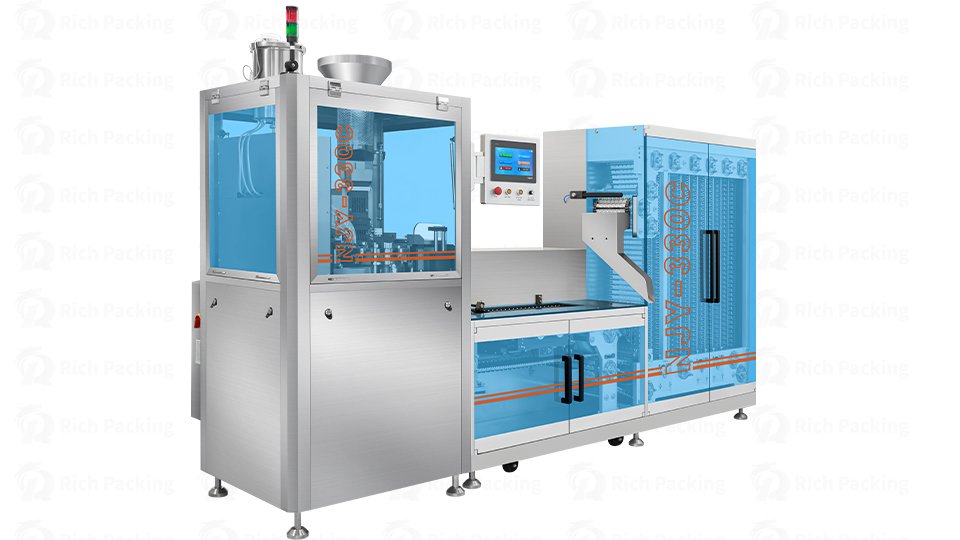
Qu’il s’agisse d’un modèle semi-automatique ou entièrement automatique, la série NJY de Rich Packing est conçue pour les fabricants qui ont besoin d’un remplissage précis et d’une étanchéité parfaite :
● Servomoteur de haute précision pour un remplissage précis des liquides
● Utiliser un mastic d'étanchéité adapté au matériau de la capsule pour une étanchéité parfaite.
● Système de surveillance en temps réel : aucun remplissage de liquide pour les éléments défectueux
Si vous comparez une machine de remplissage de capsules liquides semi-automatique pour la phase de développement avec une machine automatique pour la production commerciale, la question essentielle est simple : le système maîtrise-t-il les détails susceptibles de provoquer des fuites ? En matière d’étanchéité, le souci du détail est primordial. Pour plus d’informations, n’hésitez pas à nous contacter.
Pour les fabricants, le scellage parfait des capsules est un défi constant. Qu'il s'agisse du scellage par bande, par fusion ou d'une autre méthode, l'objectif reste le même : une performance de scellage stable et de haute qualité. Bien entendu, si vous envisagez d'acquérir une nouvelle machine à capsules, Rich Packing est là pour vous accompagner.
Q1 : Pourquoi la capsule doit-elle être scellée ?
C'est parce qu'une capsule fermée ne peut pas être bien scellée que l'étanchéité est importante pour éviter les fuites et les infiltrations d'humidité.
Q2 : Quels sont les trois principaux types de capsules ?
Les trois grandes catégories dont on parle le plus souvent sont :
● gélules dures
● Gélules végétariennes (gélules HPMC)
● Gélules molles
Q3 : Comment prendre les capsules liquides ?
Dans la plupart des cas, il faut les prendre entiers. Ne les mâchez pas et ne les ouvrez pas négligemment, surtout s'il s'agit de produits à base d'huile.
[1] Grand View Research : Rapport sur la taille, la part de marché et la croissance du marché des capsules vides
https://www.grandviewresearch.com/industry-analysis/empty-capsules-market
[2] Comprimés et capsules : Demandez à un expert — Pourquoi utiliser le ligaturage des capsules ?
https://www.tabletscapsules.com/3641-Technical-Articles/586241-Ask-an-Expert/
[3] Blog de CapsCanada : Types de scellage pour les capsules remplies de liquide

29+ years in pharmaceutical machinery, covering capsule filling, tablet pressing, blister packaging, tablet and capsule counting, cartoning, GMP production, and overseas machine service.

E-mail : manager@richpacking.cn
Building D, No. 226, Beishan Qiaotou Street, Haizhu District, Guangzhou City, Guangdong Province, China


 Réseau IPv6 pris en charge