






 Domicile
 Des produits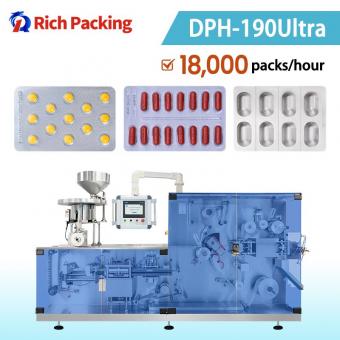
29+ years in pharmaceutical machinery, covering capsule filling, tablet pressing, blister packaging, tablet and capsule counting, cartoning, GMP production, and overseas machine service.

Une étiquette de médicament contient bien plus qu’un nom de produit. Elle peut indiquer la concentration du produit, la forme pharmaceutique, la date d’expiration, le numéro de lot, le numéro de série, le code-barres, les instructions de stockage et les informations du fabricant. Pour les utilisateurs, les pharmaciens, les distributeurs et les équipes d’emballage, ces informations permettent l’identification du produit et sa traçabilité.
Une étiquette peut aider à confirmer les informations du produit, mais elle ne doit pas être utilisée seule pour décider si un médicament est sûr à prendre. Si l’emballage est endommagé, si la date d’expiration est incertaine ou si les informations imprimées semblent incorrectes, suivez les instructions de l’emballage d’origine et consultez un pharmacien ou un professionnel qualifié.
Pour les équipes d’emballage pharmaceutique, les codes des étiquettes de médicaments font partie d’une chaîne de contrôle qualité. Un mauvais numéro de lot, un code-barres illisible, une date d’expiration peu claire ou une incohérence entre flacon et carton peuvent affecter le contrôle des stocks, la traçabilité, la gestion des rappels et la libération finale du produit.
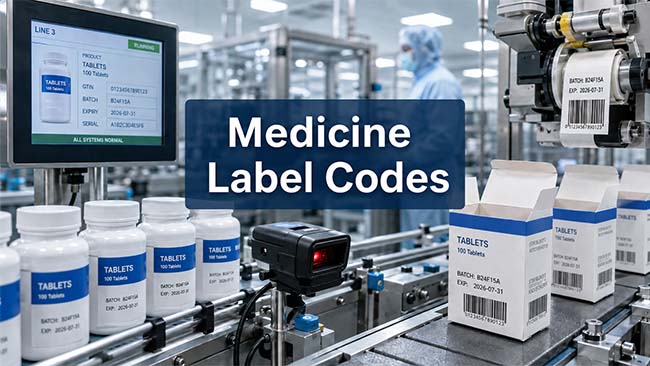
Le contenu d’une étiquette de médicament dépend du marché, de la forme pharmaceutique, de la taille du conditionnement et des exigences locales. Cependant, plusieurs éléments apparaissent fréquemment sur les emballages de médicaments : nom du produit, concentration, forme pharmaceutique, numéro de lot ou de série, date d’expiration, code-barres, instructions de stockage et informations du fabricant.
Les mêmes informations peuvent apparaître à plusieurs niveaux d’emballage. Une étiquette de flacon, un blister, une boîte, un lot groupé ou un carton d’expédition peuvent tous contenir des données d’identité ou de traçabilité du produit. Si ces niveaux ne correspondent pas, le problème relève du contrôle de la ligne de conditionnement et non seulement de la conception de l’étiquette.
| Élément de l’étiquette | Ce qu’il indique | Contrôle de la ligne de conditionnement |
|---|---|---|
| Nom du produit | Identité du médicament | Étiquette ou carton correct utilisé |
| Concentration | Quantité par dose | Correspondance avec le produit et le carton |
| Forme pharmaceutique | Comprimé, gélule, liquide, poudre, etc. | Itinéraire d’emballage correct |
| Date d’expiration | Durée d’utilisation définie par le fabricant | Code de date clair et format correct |
| Numéro de lot | Identité du lot de production | Correspondance entre flacon, blister, étiquette et carton |
| Numéro de série | Code de traçabilité au niveau du lot | Cohérence avec les enregistrements |
| Code-barres | Données produit lisibles par machine | Lisibilité et correspondance des données |
| Instructions de stockage | Conditions de manipulation et de stockage | Impression claire sur l’étiquette ou le carton |
La lisibilité dépend de bien plus que du design. La position de l’étiquette, le contraste d’impression, le placement du code-barres, la forme du flacon, le pliage du carton, la qualité de l’encre et le système d’inspection influencent tous le conditionnement final.
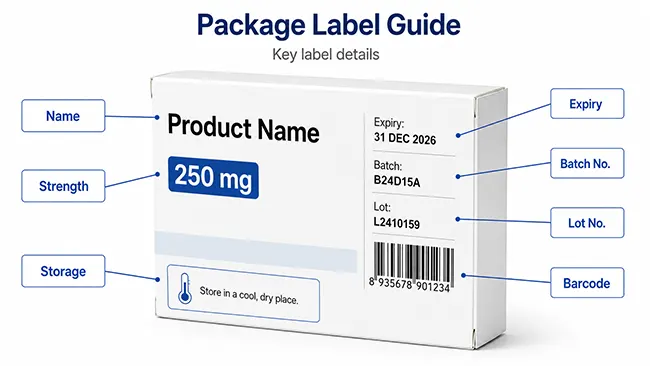
La date d’expiration indique aux utilisateurs, aux distributeurs et aux équipes d’emballage la limite de temps assignée à un médicament dans des conditions de stockage définies. Dans certains marchés, le terme date de péremption est également utilisé. La formulation exacte et le format de date peuvent varier selon le pays et le type de produit.
Une date d’expiration claire soutient la rotation des stocks, les contrôles d’entrepôt, la gestion de la distribution et la libération des produits. Sur une ligne d’emballage, la date doit être imprimée au bon endroit, dans le bon format et avec un contraste suffisant pour rester lisible après manipulation et transport.
Les problèmes courants liés à la date d’expiration incluent une encre faible, des caractères manquants, des bavures, une mauvaise configuration de la date, un mauvais alignement et des codes imprimés sur un pli ou une surface courbe. Sur les flacons, la date peut apparaître sur l’étiquette, le bouchon ou le carton. Sur les blisters, elle peut figurer sur la feuille d’aluminium ou la boîte extérieure.
Pour une qualité d’emballage stable, le contrôle de la date d’expiration dépend d’une configuration correcte des données, d’un équipement de codage fiable et de l’inspection. Si l’espacement des flacons est instable ou si les cartons ne sont pas positionnés de manière cohérente, les codes de date peuvent se décaler ou devenir illisibles.
Un numéro de lot identifie un groupe de produits fabriqués dans le cadre d’un lot de production défini. Un numéro de série est également utilisé pour la traçabilité et peut désigner un lot de production ou de conditionnement, selon le système de l’entreprise. Dans les discussions quotidiennes d’emballage, les deux termes peuvent sembler similaires, mais chaque système qualité définit leur utilisation.
Les informations de lot et de série relient les produits finis aux dossiers de production, aux contrôles qualité, à l’historique de distribution et aux actions de rappel. Si un problème qualité apparaît ultérieurement, les données de lot ou de série permettent d’identifier les produits potentiellement concernés.
| Terme | Signification courante | Contrôle de la ligne de conditionnement |
|---|---|---|
| Numéro de lot | Identité du lot de production | Code correct sur l’étiquette, le carton, le blister ou le flacon |
| Numéro de série | Code de traçabilité au niveau du lot | Correspondance avec les dossiers de production et de conditionnement |
| Numéro de série | Identité unique du produit dans les marchés sérialisés | Absence de doublons et capture correcte des données |
| Identifiant produit | Données d’identité au niveau du produit | Informations imprimées et lisibles par machine correctes |
Des erreurs d’emballage peuvent survenir lorsqu’un mauvais lot est chargé dans une imprimante, que d’anciennes illustrations restent utilisées, qu’un rouleau d’étiquettes n’est pas remplacé après un changement de produit, ou que le code du carton ne correspond pas à l’étiquette du flacon. Ces risques augmentent dans les petites séries, les lignes multi-produits et les changements fréquents.
Un code-barres rend les informations de l’étiquette de médicament lisibles par machine. Il peut s’agir d’un code-barres linéaire, d’un code 2D ou d’un code Data Matrix, selon le type de produit, le marché et le niveau d’emballage.
Pour certains produits médicamenteux relevant du DSCSA des États-Unis, la FDA décrit les identifiants de produit comme incluant l’identifiant numérique standardisé, le numéro de lot et la date d’expiration sous forme lisible par l’humain et par machine, les données lisibles par machine étant portées dans un code-barres Data Matrix 2D. (U.S. Food and Drug Administration) Les directives de la Therapeutic Goods Administration (TGA) expliquent également comment la sérialisation et les codes Data Matrix peuvent être utilisés sur les emballages de médicaments. (Therapeutic Goods Administration (TGA))
Pour les opérations de conditionnement, la qualité des codes-barres est plus que des données correctes. Le code doit être lisible dans des conditions réelles de ligne. Faible contraste, réflexion, surfaces courbes, plis d’étiquette, étiquettes endommagées, faible résolution d’impression ou placement incorrect peuvent tous provoquer un échec de lecture.
Un code-barres qui semble acceptable à l’œil peut tout de même échouer à la lecture par un scanner. De nombreuses lignes de conditionnement pharmaceutique utilisent donc des lecteurs de codes-barres ou des systèmes de vision pour vérifier si le code est présent, lisible et correspond aux données produit attendues.
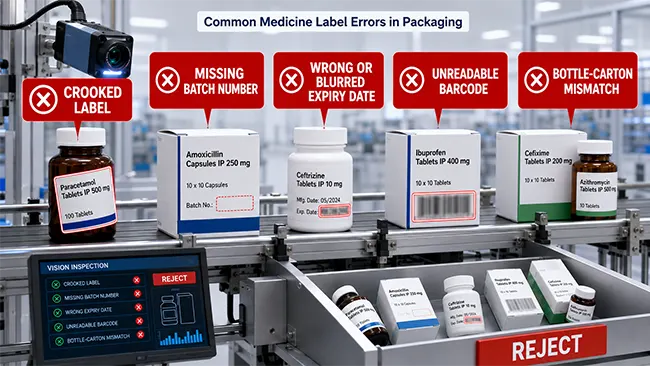
Les erreurs d’étiquetage des médicaments commencent souvent par de petits problèmes de réglage : mauvais rouleau d’étiquettes, changement d’imprimante manqué, ancien code de date, trajet produit instable ou mauvais positionnement du code.
| Problème d’étiquette | Cause possible | Contrôle de la ligne de conditionnement |
|---|---|---|
| Numéro de lot manquant | Imprimante non déclenchée ou mauvais réglage | Inspection de présence d’impression |
| Mauvaise date de péremption | Date incorrecte saisie après changement | Vérification du code de date |
| Code-barres illisible | Mauvaise qualité d’impression ou dommage de l’étiquette | Lecture de codes-barres ou inspection par vision |
| Étiquette de travers | Problème de manipulation de la bouteille ou d’alimentation des étiquettes | Machine d’étiquetageréglage |
| Code maculé | Encre, surface, séchage ou problème de contact | Contrôle de qualité du code avant libération |
| Désalignement bouteille-carton | Mélange de produits ou alimentation incorrecte des cartons | Mise en étuis et correspondance des codes |
| Mauvaise adhérence de l’étiquette | Surface de la bouteille, matériau de l’étiquette ou problème de pression | Contrôle d’application de l’étiquette |
Ces problèmes peuvent affecter conditionnement primaire ou conditionnement secondaire. Une bouteille peut être correctement remplie mais porter la mauvaise étiquette. Une plaquette thermoformée peut être correcte, tandis que le carton porte un mauvais numéro de lot. Un code-barres peut être correctement imprimé mais devenir illisible après pliage, vernissage ou manipulation.
Détecter ces problèmes tôt réduit les reprises. Un poste de rejet contrôlé après le codage, l’étiquetage ou la mise en étuis peut retirer les emballages défectueux avant qu’ils n’atteignent le conditionnement final.
Une ligne de conditionnement de médicaments peut inclure le remplissage, le comptage, le bouchonnage, le scellage, l’étiquetage, le codage, la mise en étuis, l’inspection et le rejet. Le contrôle des codes d’étiquetage s’étend généralement sur plusieurs postes, la ligne doit donc maintenir l’identité du produit, les données imprimées et les emballages finaux synchronisés.
Pour le conditionnement en bouteilles, une étiqueteuse doit appliquer l’étiquette de manière lisse et cohérente afin de permettre la lecture des codes-barres. Les bouteilles rondes, petites bouteilles, surfaces humides ou transferts instables peuvent provoquer des plis, des étiquettes de travers ou une mauvaise lecture du code. Dans une ligne de mise en flacons de comprimés et de gélules avec comptage, un transfert stable des bouteilles aide également à maintenir la séquence correcte du comptage, du bouchonnage, du scellage, de l’étiquetage, du codage et de la mise en étuis.
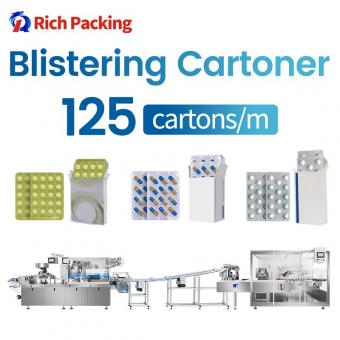
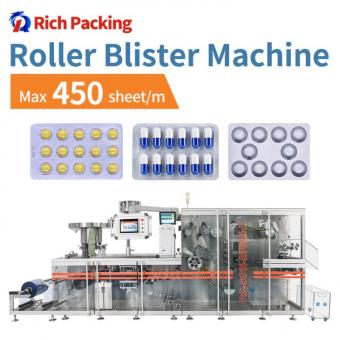
Pour le conditionnement en blister, le contrôle des codes peut impliquer le film blister, les cartes blister, les étuis et les caisses extérieures. Le machine de conditionnement sous blister protège les comprimés ou capsules dans des alvéoles individuelles, tandis que le carton contient souvent des informations de traçabilité plus complètes telles que le numéro de lot, la date d’expiration, le code-barres et les détails de la notice du produit.
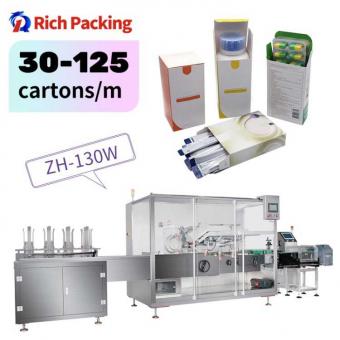
Une machine d’encartonnage peut traiter des cartons avec des codes imprimés, des notices, des étiquettes inviolables et des zones de codes-barres. Si le mauvais carton est alimenté, si le code est illisible ou si le carton n’est pas vérifié avant la sortie, un problème d’étiquetage peut devenir un problème sur le produit fini.
Les codes d’étiquetage des médicaments ne sont pas seulement des éléments graphiques. Ils influencent l’emplacement des imprimantes, la manière dont les étiquettes sont appliquées, l’emplacement des scanners et la façon dont les emballages rejetés sont retirés de la ligne. Avant de valider une configuration d’étiquetage ou d’encartonnage, l’équipe de conditionnement doit vérifier la forme de l’emballage, la zone d’étiquette, le type de code, la position d’impression, la méthode d’inspection et les besoins de changement de série.
Pour le conditionnement en bouteilles, les bouteilles rondes, petites bouteilles ou étiquettes brillantes peuvent nécessiter une attention particulière à la pression d’étiquetage, à la rotation de la bouteille et à l’angle de lecture du code-barres. Pour le conditionnement en cartons, la zone de codage doit être éloignée des plis, des zones de colle et des surfaces courbes afin que les numéros de lot, dates d’expiration et codes-barres restent lisibles.
L’inspection doit également être planifiée tôt. Une ligne doit confirmer si l’étiquette est présente, si le code est lisible et si l’emballage correspond au produit attendu. Si les emballages défectueux ne peuvent pas être rejetés proprement, les erreurs d’étiquetage peuvent se poursuivre jusqu’au conditionnement final.
Pour les lignes multi-produits, le contrôle des changements de série est particulièrement important. Le bon rouleau d’étiquettes, carton, code de lot, date d’expiration et données de code-barres doivent correspondre au produit conditionné. C’est pourquoi les échantillons de bouteilles, cartons, maquettes d’étiquettes et positions de code doivent être examinés avant la finalisation de l’agencement des équipements.
Dans ce type de revue de projet, Rich Packing peut aider à vérifier les échantillons d’emballage, les maquettes d’étiquettes, les positions des codes, les points de connexion de ligne, les besoins d’installation, la formation des opérateurs et l’assistance vidéo à distance avant la validation du parcours de conditionnement final.
Une étiquette de médicament peut sembler être une petite partie de l’emballage, mais elle contient des informations qui affectent l’identification, la traçabilité, le stockage, la distribution et la qualité de l’emballage. La date d’expiration, le numéro de lot et les données de code-barres doivent être clairs pour les humains et lisibles par les machines.
Pour les équipes de conditionnement pharmaceutique, la qualité des codes d’étiquetage dépend d’une alimentation stable, d’une application correcte des étiquettes, d’un codage fiable, de la lisibilité des codes-barres, de la correspondance des cartons, de l’inspection et du rejet. Lorsque ces contrôles fonctionnent ensemble, la ligne est mieux préparée à prévenir les mauvaises étiquettes, les dates illisibles, les codes-barres illisibles et les incohérences des emballages finaux.
Une étiquette de médicament est l’information imprimée sur un emballage de médicament, une bouteille, un carton de blister ou un composant d’emballage associé. Elle peut indiquer le nom du produit, le dosage, la forme pharmaceutique, le numéro de lot, la date d’expiration, le code-barres, les instructions de stockage et les informations du fabricant.
La date d’expiration est la date attribuée par le fabricant dans des conditions de stockage définies. Elle doit être imprimée clairement sur l’emballage. Si la date est peu lisible ou si l’emballage semble endommagé, suivez les instructions d’origine et consultez un professionnel qualifié.
Un numéro de lot identifie un groupe de produits fabriqués dans un lot de production défini. Il permet de relier les produits finis aux dossiers de production, aux contrôles qualité, à l’historique de distribution et à la gestion des rappels.
Le numéro de lot et le numéro de lot de production sont souvent liés, mais leur signification exacte dépend du système qualité du fabricant et des exigences du marché. Les deux soutiennent la traçabilité et doivent correspondre aux enregistrements d’emballage corrects.
Un code-barres rend les informations produit lisibles par machine. Il peut prendre en charge la lecture par scan, l’identification des produits, la traçabilité, le contrôle des stocks et la vérification de l’emballage.
Une étiquette illisible peut compliquer l’identification, la lecture par scan, la gestion des stocks ou les opérations de rappel. Sur une ligne de conditionnement, les étiquettes ou codes illisibles doivent être détectés et rejetés avant la libération finale.
Les étiqueteuses, systèmes de codage, lecteurs de codes-barres, unités d’inspection visuelle, encartonneuses et stations de rejet peuvent prendre en charge le contrôle des codes d’étiquetage. La configuration exacte dépend du format d’emballage, de la vitesse et des besoins de traçabilité.
Les acheteurs doivent confirmer la taille de l’étiquette, la forme de l’emballage, le type de code, la position d’impression, la méthode d’inspection, la station de rejet, les besoins de changement de format et l’intégration de la ligne avant de commander l’équipement. Les tests d’échantillons sont utiles lorsque les étiquettes, bouteilles, cartons ou positions de code sont difficiles à manipuler.
FDA, Identifiants de produit dans le cadre du Drug Supply Chain Security Act. (U.S. Food and Drug Administration)
Therapeutic Goods Administration, Comprendre la sérialisation et les codes Data Matrix sur les médicaments. (Therapeutic Goods Administration (TGA))

29+ years in pharmaceutical machinery, covering capsule filling, tablet pressing, blister packaging, tablet and capsule counting, cartoning, GMP production, and overseas machine service.

E-mail : manager@richpacking.cn
Building D, No. 226, Beishan Qiaotou Street, Haizhu District, Guangzhou City, Guangdong Province, China


 Réseau IPv6 pris en charge